Wrinkles are a natural part of aging, but understanding how to combat wrinkles can help you protect skin quality and keep your appearance healthier, smoother, and naturally refreshed over time.
Sun exposure, repeated facial expressions, declining collagen and elastin, loss of facial volume, hormonal changes, sleep, nutrition, smoking, stress, and your daily skincare routine can all influence how your skin ages.
At Sleep & Wellness Medical Associates and Innova Skin & Laser, we believe the best approach to facial rejuvenation is rarely a single treatment. Instead, we look at the face comprehensively: skin quality, muscle activity, collagen loss, volume loss, facial structure, lifestyle, and overall wellness.
The goal should not simply be to “erase wrinkles.” It should be to help your skin look healthier, smoother, refreshed, and naturally rejuvenated while preserving the features and expressions that make you look like yourself.
Why Do We Develop Wrinkles?
Young skin contains abundant collagen and elastin, proteins that provide strength, firmness, and elasticity. With age, collagen production and cellular renewal gradually decline. The skin becomes thinner and less resilient, while underlying facial fat and structural support also change.
At the same time, years of smiling, squinting, frowning, raising the eyebrows, and other facial expressions repeatedly fold the skin.
This creates two broad categories of wrinkles.
Dynamic wrinkles appear primarily with facial movement. Examples include forehead lines, crow’s feet around the eyes, and frown lines between the eyebrows.
Static wrinkles remain visible even when the face is relaxed. These may develop from long-standing dynamic lines, collagen loss, sun damage, skin laxity and changes in facial volume.
Understanding why a wrinkle is present is important because different types of wrinkles require different treatments.
1. Start With the Most Important Anti-Aging Treatment: Sun Protection
One of the greatest accelerators of visible skin aging is cumulative ultraviolet exposure.
UV radiation contributes to collagen and elastin breakdown, pigmentation changes, uneven texture and premature wrinkling. This process, commonly called photoaging, accumulates over many years.
For most patients, a good anti-aging regimen should therefore include:
- Broad-spectrum SPF 30 or higher every day
- Reapplication during prolonged outdoor exposure
- Hats and sunglasses when appropriate
- Avoiding excessive midday sun
- Avoiding tanning beds
Sunscreen isn’t only something to use at the beach. UV exposure occurs during everyday activities such as driving, walking, gardening, exercising and sitting near windows.
Protecting your skin also helps preserve the results of aesthetic treatments.
2. Build a Consistent Medical-Grade Skincare Routine
You don’t necessarily need a shelf full of products. Consistency and appropriate ingredients are more important.
Depending on your skin type and medical history, an anti-aging regimen may incorporate ingredients such as:
Retinoids
Retinoids and retinol derivatives can improve cellular turnover and, over time, help improve fine lines, pigmentation and skin texture. Prescription-strength products aren’t appropriate for everyone and can cause irritation, so treatment should be individualized.
Vitamin C and Antioxidants
Topical antioxidants such as vitamin C can complement sunscreen by helping protect against oxidative stress while improving the appearance of uneven pigmentation and overall skin brightness.
Hyaluronic Acid
Hyaluronic acid attracts and retains water, improving skin hydration and temporarily making fine lines appear softer.
Moisturizers and Barrier Support
Healthy skin requires a healthy barrier. Overusing exfoliants, acids and other active products can actually worsen irritation and make skin look dry and aged.
Sometimes less is more.
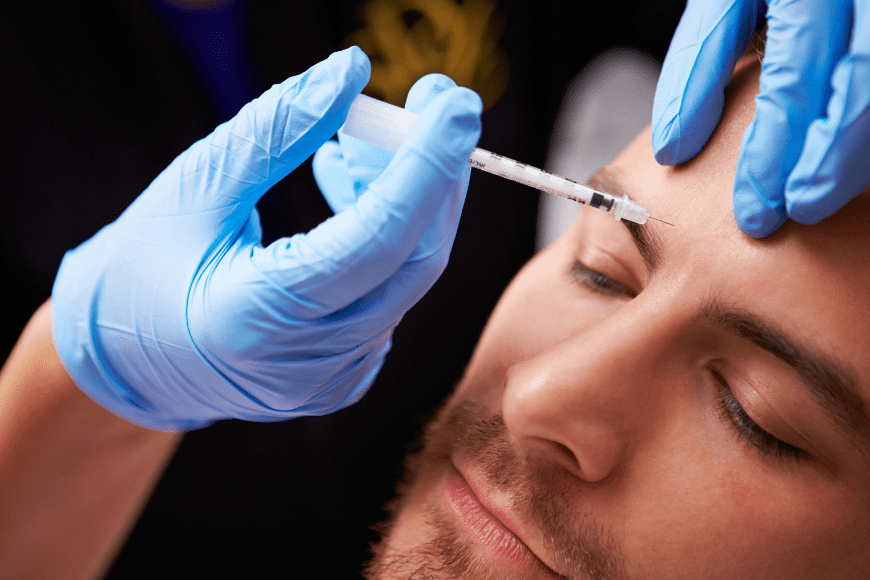
3. Botox and Other Neuromodulators for Expression Lines
When wrinkles are primarily caused by repetitive muscle contraction, topical skincare alone cannot address their underlying cause.
Neuromodulators such as Botox® and similar products temporarily reduce selected muscle activity, allowing overlying skin to appear smoother.
Common treatment areas include:
- Forehead lines
- Frown lines between the eyebrows
- Crow’s feet
- Selected lines around the nose and mouth
- Chin dimpling
- Certain lower-face concerns
- Platysmal bands and selected neck concerns
The key is not simply injecting a wrinkle. Effective treatment requires understanding facial anatomy, muscle function and how different muscles interact with one another.
At Innova Skin & Laser, our philosophy is to create balance rather than a frozen appearance. The objective is generally to soften excessive muscle activity while maintaining natural expression.
Results and duration vary by product, treatment area, dose and individual patient.
4. Dermal Fillers: Treating Volume Loss Rather Than Just the Wrinkle
Sometimes a visible crease isn’t primarily a skin problem at all.
As we age, facial fat compartments, bone and other supporting structures change. The cheeks may flatten, temples may hollow, lips may lose definition, and folds around the mouth may become more prominent.
In appropriately selected patients, hyaluronic-acid dermal fillers and other injectable options can restore strategic areas of lost volume and improve facial proportions.
Depending upon anatomy and goals, treatment may involve areas such as:
- Cheeks
- Temples
- Lips
- Chin
- Jawline
- Nasolabial folds
- Marionette region
- Other areas of age-related volume loss
More filler isn’t necessarily better. We favor strategic volume restoration that respects each patient’s natural facial anatomy.
5. Microneedling and RF Microneedling: Encouraging Collagen Remodeling
If the primary concern is skin quality—fine lines, enlarged pores, textural irregularities, acne scars or early laxity—collagen-stimulating treatments may be appropriate.
Traditional microneedling creates controlled microscopic injuries that stimulate the skin’s natural repair response.
Radiofrequency microneedling, including technologies such as Morpheus8, combines microneedling with controlled RF energy delivered into selected tissue depths.
Depending on the treatment plan, RF microneedling may help improve:
- Fine lines
- Skin texture
- Acne scarring
- Mild-to-moderate skin laxity
- Crepey skin
- Overall skin quality
Because RF treatments can be adjusted for different depths and treatment goals, proper patient selection and individualized settings are important.
6. Laser Resurfacing: Going Deeper for Sun Damage, Texture and Wrinkles
For patients with more significant photoaging, wrinkles, pigmentation irregularities or textural changes, fractional laser resurfacing may offer another level of rejuvenation.
Fractional lasers create microscopic treatment zones while leaving surrounding tissue available to assist healing. Depending upon the technology and intensity used, treatment can stimulate substantial remodeling of damaged skin and collagen.
At Innova Skin & Laser, we offer advanced laser-based treatments, including fractional CO₂ resurfacing, for appropriately selected patients.
More intensive resurfacing can produce more significant improvement but also involves greater downtime and aftercare. Your skin type, pigmentation, medical history, previous procedures and willingness to tolerate downtime all matter when choosing the appropriate treatment.
7. FaceTite, AccuTite and Advanced RF for Skin Laxity
Wrinkles are sometimes only one component of facial aging. Skin laxity and changes in underlying tissue can contribute to jowling, loss of jawline definition, lower-face aging and loose neck skin.
For selected patients, minimally invasive radiofrequency technologies such as FaceTite and AccuTite may provide deeper tissue remodeling and contraction than surface treatments alone.
These procedures occupy an important space between noninvasive treatments and traditional surgery.
Not everyone needs—or wants—a facelift. Conversely, patients with advanced laxity should understand that nonsurgical technology has limitations.
An appropriate consultation helps determine where a patient falls along that spectrum.
8. PRP, Microfat and Nanofat: Regenerative Approaches to Facial Aging
Another area of modern aesthetic medicine involves using the patient’s own biological tissues to support rejuvenation.
At our practice, selected patients may be candidates for regenerative approaches including platelet-rich plasma (PRP), microfat and nanofat treatments.
Microfat can be strategically used for volume restoration in appropriately selected areas, while nanofat is used differently, with an emphasis on skin-quality applications rather than conventional volumization.
These treatments can sometimes be incorporated into a broader rejuvenation strategy alongside energy-based treatments or other procedures.
9. Chemical Peels and Surface Rejuvenation
Not every patient needs an advanced device.
Chemical peels and other appropriately selected resurfacing treatments can help improve superficial pigmentation, rough texture and dullness by promoting controlled exfoliation and renewal.
Treatment strength should be selected according to skin type, goals and tolerance for downtime.
10. Don’t Ignore Sleep, Stress, Nutrition and Overall Wellness
Beautiful skin doesn’t exist independently of the rest of the body.
Chronic sleep deprivation can affect recovery and overall appearance. Smoking accelerates visible skin aging. Poor nutrition can deprive tissues of nutrients needed for repair. Chronic stress may influence inflammatory and hormonal pathways.
We encourage patients to think beyond procedures and consider:
Sleep: Aim for consistent, restorative sleep.
Nutrition: Emphasize adequate protein and a nutrient-dense diet with vegetables, fruits, healthy fats and minimally processed foods.
Exercise: Regular physical activity supports cardiovascular and metabolic health.
Hydration: Adequate hydration supports normal physiological function, although simply drinking excessive water will not erase wrinkles.
Smoking: Avoid tobacco and smoking.
Stress management: Exercise, mindfulness, social connection and other sustainable approaches to stress reduction can contribute to overall wellness.
This integrated philosophy is one of the reasons our aesthetic and wellness programs work closely together.
11. Combination Therapy: Why One Treatment Isn’t Always the Answer
A common mistake in aesthetic medicine is trying to solve every problem with one device or injectable.
Aging occurs at multiple levels:
Muscle activity → dynamic wrinkles
Skin damage → pigmentation, texture and fine lines
Collagen loss → thinning and laxity
Volume loss → hollowing and folds
Structural changes → altered facial contours
Therefore, a patient might benefit from a carefully staged combination of treatments—for example:
Botox + skincare + fractional laser
or
Strategic filler + RF microneedling
or, in selected patients,
FaceTite/AccuTite + resurfacing + regenerative treatment
The combination should be determined by anatomy and clinical goals rather than simply performing more procedures.
12. Aftercare Matters
The procedure may happen in the office, but much of the healing occurs afterward.
Post-treatment instructions vary considerably between Botox, fillers, microneedling, RF procedures, lasers and surgical treatments. Patients should therefore follow the specific instructions provided for their procedure rather than relying on generic advice found online.
Depending upon the treatment, recommendations may include temporary restrictions involving:
- Exercise
- Sun exposure
- Heat and saunas
- Makeup
- Certain skincare ingredients
- Alcohol
- Manipulation of the treated area
Contact your treating clinician if you experience symptoms that are unexpected or concerning.
What Is the Best Wrinkle Treatment for You?
There is no single “best” wrinkle treatment.
A 35-year-old with early forehead lines may need an entirely different strategy from a 60-year-old with significant sun damage, volume loss and lower-face laxity.
That’s why we begin with a comprehensive assessment.
At Sleep & Wellness Medical Associates and Innova Skin & Laser, we evaluate your skin quality, facial anatomy, muscle movement, volume distribution, degree of laxity, medical history, lifestyle, previous treatments and personal goals before developing a plan.
Our philosophy is straightforward:
Prevent what we can.
Restore what has been lost.
Stimulate the body’s regenerative capacity when appropriate.
Treat the underlying cause of each aging feature.
And preserve a natural appearance.
The objective isn’t to make everyone look younger at any cost. It is to help you look healthy, rested, refreshed and authentically yourself.
Ready to Develop Your Personalized Skin Rejuvenation Plan?
The most effective way to learn how to combat wrinkles is to identify what is causing them—sun damage, muscle movement, collagen loss, volume loss, or skin laxity—and build a personalized treatment plan. If you’re concerned about wrinkles, sun damage, facial volume loss, skin laxity or changes in skin texture, schedule a consultation with Sleep & Wellness Medical Associates / Innova Skin & Laser in Lawrence Township, New Jersey.
Together, we can determine whether your best approach involves medical-grade skincare, Botox, dermal fillers, microneedling or Morpheus8 RF microneedling, fractional CO₂ laser resurfacing, FaceTite/AccuTite, PRP, regenerative treatments—or a carefully designed combination.
Individual results vary. Not every treatment is appropriate for every patient. A medical consultation is necessary to determine appropriate treatment options, risks, benefits, alternatives and expected recovery.
Sources
Sleep & Wellness Medical Associates | Innova Skin & Laser